Garage floor concrete in San Carlos CA - a floor built for how you use it
Cracked, sinking or pitted garage floor? We pour a new slab planned around your car, your coating and any lift you might add.
What does a new garage floor in San Carlos involve?
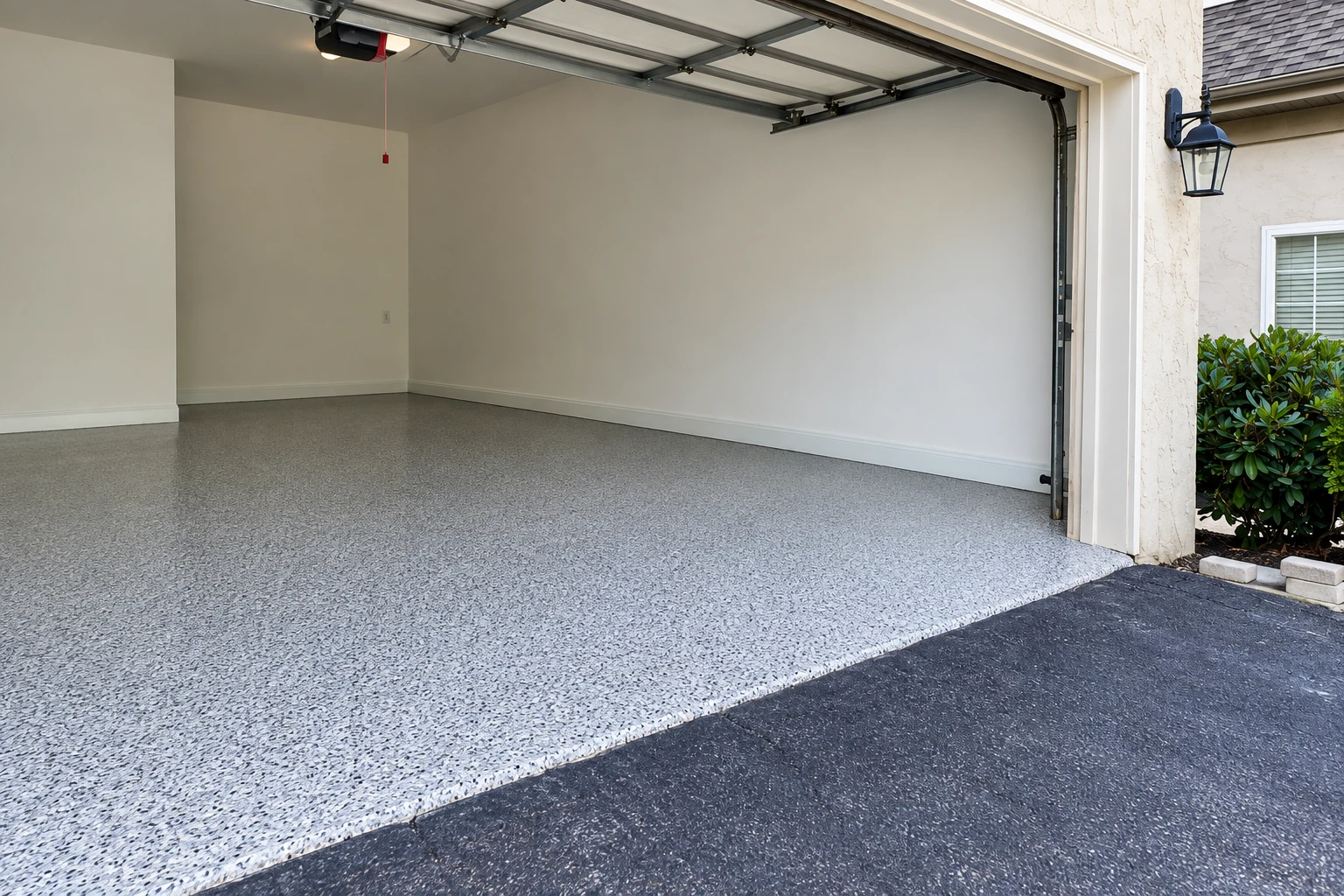
Garage floor concrete in San Carlos, CA is a new slab for your garage. At Complete San Carlos Concrete, that means we break out the old floor if there is one, dig out and pack the base, then form, pour and finish a floor that's flat, pitched to drain and planned for how you use the space.
Most people call because the old floor is cracked, has dropped near the door or is too rough to coat. The first thing I ask is how you'll use the garage, because an epoxy coating or a future car lift changes what goes under and into the slab. The price moves with the size of the floor, whether an old slab has to come out, and how thick and reinforced the new one needs to be. The schedule turns mostly on the breakout and the curing wait before you can park, and your written estimate spells out the work for your garage. California's state licensing board treats this flat work as concrete contractor work, and we're fully licensed and insured. If you'd like color or a pattern on the floor, our decorative concrete work can go in with it.
How do you know your garage floor needs replacing?
Some garage floor problems are only on the surface, and some mean the ground under the slab has moved. These are the signs I look for, and I'll tell you plainly if a new floor isn't worth doing.
Cracks that keep getting wider usually mean the dirt under the slab settled or was never packed.
A section that dropped near the garage door often points to washed-out base or soft fill below.
Water that pools in the middle or runs toward the house means the floor isn't pitched right.
A dusty, flaking top that wears away under your shoes usually comes from a weak surface at the pour.
Cracks wandering across the floor instead of along the cut lines usually mean the joints were late or skipped.
A coating that keeps peeling or bubbling often means moisture or oil is coming up through the slab.
If a crack is still growing or water is reaching the house wall, call before you buy a coating, because a slab that's moving will take the coating with it.
What happens when you call us about a garage floor in San Carlos?
Here's how a garage floor job runs with us, from the first call to the final walk-through, and what you'll have in hand before you decide anything.
Call us or send the form
Tell us the garage size, the finish you're planning and whether a lift might go in later, and we'll set a time to come out. Those three answers shape most of the job, so having them ready saves a second visit.
I measure and look it over
I usually come out myself to measure, check where the water runs and talk through how you'll use the garage. You then get a written estimate that spells out the work, from breaking out the old floor to the finish, so you know what you're paying for before you decide.
We form, pour and finish
Our crew digs out and packs the base, sets the forms, pours and finishes, and I check the work as it goes. We cut the control joints, straight lines that give the slab a planned place to crack, while the concrete is still young enough for them to do their job.
We walk the floor together
I go over the finished floor with you before we call it done. The concrete keeps curing after that, slowly gaining strength, so we'll go over when it's safe to walk on and when to bring the car back.
Get a written estimate for your new garage floor
Send the form and we'll reply within one business day to set up a free on-site estimate. I come out, measure and send it to you in writing, with no pressure and no obligation to go ahead.
- Call
- (650) 866-1977
- Hours
- Mon–Fri: 8 AM–11 PM, Sat–Sun: 7 AM–11 PM
What goes under and into a garage slab
The part of a garage floor you never see is the part I won't cut. A base that's only raked level settles with the dirt, so we dig out and pack the subgrade, the ground the slab sits on, even if that means a plainer finish. Some fill ground is packed and firm, but fill placed before 1965 is nearly everywhere just dumped, so ask me how we'll check yours.
Bay Area garage slabs usually run at the thicker end of what home floor slabs get. Rebar, the steel inside the slab that keeps cracks from spreading apart, only works at the height it's specified, so ask any crew how they hold it up instead of letting it lie on the base. A garage cut into a hillside may also need concrete retaining walls to hold the bank beside it.
San Mateo County's Flows To Bay program advises keeping cement washout off driveways, streets and gutters, with mixers and tools washed only where the rinse drains into a lined pit. That matters when the truck is sitting in your driveway. Broken concrete can be recycled, so ask where your old floor is headed when it's hauled away. We're based in San Carlos and do the same work in the cities around it, along with others nearby.
Garage floor questions we hear in San Carlos
How much does a new concrete garage floor cost in the Bay Area?
A concrete slab in the Bay Area usually costs about $8 to $16 per square foot, and that's what the area usually runs, not a quote from us. Reinforced slabs cost more per square foot than plain pads, so when you compare quotes, check whether reinforcement is in each one. Our written estimate spells out what's included, and the work comes with our promise, satisfaction guaranteed.
How long does a new garage floor take before I can park on it?
A new slab should be walkable within 48 hours, and you may want to wait a week before putting heavier loads like a car on it. Concrete takes a month to fully cure, so plan the first weeks around a floor that's still gaining strength.
Do I need a vapor barrier under my garage floor slab?
You want a vapor retarder, a sheet under the slab that slows moisture coming up, if the floor will get an epoxy or polyaspartic coating, or be heated and finished later. A bare broom-finished floor, with the light texture that gives tires and shoes grip, doesn't need one in an unheated garage. That's why we settle the finish with you before the pour, since the sheet can't go in afterward.
Can I epoxy a new garage floor as soon as it looks dry?
Not always, because a young floor that looks dry can still hold enough moisture to hurt how a coating bonds. Oil, chemicals left by tires and the curing compound sprayed on a fresh slab can cause the same trouble, so the floor needs checking and cleaning before any coating goes on.
How do I plan a garage floor for a car lift?
Get the lift maker's concrete requirements before the slab is built, because lift loads and anchors can call for a specific slab thickness, strength and reinforcement. Even if the lift is years off, tell us at the estimate, since it's far easier to build that into the pour than to cut out and repour a section later.
What causes a new garage floor to crack?
Most cracks in a new slab come from a base that settles or from control joints cut late or skipped, so the slab cracks where it wants to. A two-car garage usually gets at least one joint each way, so expect four panels with straight lines between them, and that's where we want any cracking to happen.
Other concrete work that pairs with a garage floor
Decorative concrete
If plain gray isn't what you want, colored or patterned concrete can go in with the new floor, and it's easiest to settle before the pour.
Concrete retaining walls
When the garage sits below a slope or the driveway cuts into a hill, a retaining wall keeps the bank and its water off your new slab.
Get your garage floor planned before the pour
Call (650) 866-1977 any day of the week until 11 PM, or send the form with your garage size, so I can come out ready to measure.
Mon–Fri: 8 AM–11 PM, Sat–Sun: 7 AM–11 PM