Concrete retaining walls in San Carlos CA - a wall that holds your slope
Leaning wall, soil spilling onto the lawn, or a slope you can't use? We build poured walls with a solid base and drainage behind them.
Do you need a concrete retaining wall for your San Carlos yard?
A concrete retaining wall is a poured, steel-reinforced wall that holds a slope in place. At Complete San Carlos Concrete we build them for homes in San Carlos, CA on a dug-out, packed base, with a way for water to get out from behind the wall.
Most calls start with a slope creeping toward the patio, a wall that's started to lean, or a yard you can't use, and sometimes the new wall is what makes room for a concrete pool deck. The price moves with the wall's height and length, how much digging and hauling it takes, how easily equipment can reach it, and what the drainage behind it needs. The schedule turns on access, the dig and curing, which is the wait while the concrete hardens enough to take the soil's weight. When a wall needs a permit, we settle with you who will pull it before work starts and write that into the contract.
How do you know a slope or wall needs work?
Most of what goes wrong with a retaining wall starts behind it or under it, where you can't see it. These are the signs you can see from the yard.
The wall leans out at the top, which usually means the pressure behind it is winning.
Cracks run across the face, often where water pressure or a settling base has stressed the concrete.
Soil spills over the top or washes out the bottom after rain, a sign the slope is moving.
Damp spots, stains or soggy ground at the foot of the wall usually mean water is trapped behind it.
A gap opens between the top of the wall and the soil, often because the wall is tipping forward.
The slope is too steep to mow, plant or walk, and a wall would give you level ground to use.
If the wall is already leaning or soil moves every time it rains, call rather than wait, because the pressure behind a wall doesn't ease on its own.
What happens when you call us about a retaining wall?
I've run this business in San Carlos since 2017, and a wall job usually runs like this from the first call to the last walk-through. Here's who does what.
Call or send the form
Call (650) 866-1977 or send the form with your address, the wall's rough length and height, and a few photos of the slope. That way I know what I'm walking into before I come out.
I measure and look it over
I usually come out myself to measure, see how the ground falls and where water runs, and talk through what you want. Then I send a written estimate that spells out the dig, base, steel, drainage and finish, so you can see what you're paying for.
Our crew digs, forms and pours
When you're ready, we schedule the work, and our crew digs out, packs the base, sets the forms and steel, and pours. I check the work as it goes, because the base and the drainage are buried by the end.
We walk the finished wall
Once the concrete has cured, our crew backfills behind the wall and cleans up. I go over the finished wall with you before we call it done.
Get a written estimate for your retaining wall
Send the form and we reply within 1 business day to set up a free on-site estimate. I come out, measure and send you the estimate in writing, with no pressure and no obligation.
- Call
- (650) 866-1977
- Hours
- Mon–Fri: 8 AM–11 PM, Sat–Sun: 7 AM–11 PM
Base, drainage and steel behind a wall that lasts
Most of a wall's job happens out of sight, so that's where we put our time. We dig down to firm ground and pack the base in layers, because a wall sitting on loose, raked dirt settles and tips along with it. The face is what you'll look at for years, but the base is what keeps it standing straight.
Water is the other half. Rain soaks into the slope and pushes on the back of the wall, so we put gravel behind it and give the water a path out and away instead of letting it sit. If the budget's tight, I'll suggest trimming the finish before the drainage, because a nice-looking wall that gets pushed over isn't worth much.
Inside the wall, rebar, the steel bars that hold the concrete together when the soil pushes, runs through the footing at the bottom and up into the wall so the two work as one piece. The face can stay smooth from the forms or get a texture to match a patio. We bring the same care for base and steel to concrete floor installation.
Retaining wall questions from San Carlos homeowners
What does a retaining wall cost in the Bay Area?
A retaining wall in the Bay Area usually costs about $50 to $65 per square foot. That's the general market price for retaining walls, not our quote, and height, a hard dig, tight access and the drainage your slope needs all move where your wall lands. Your own figure comes in the written estimate after I've measured the site.
What causes a retaining wall to fail?
Most retaining walls fail because water builds up behind them and pushes until something gives. Structural walls need weep holes, small openings that let that water drain out. When you compare bids, ask each contractor how gravel backfill, a drainage blanket or a drain pipe will carry water down and away from the wall.
Is a poured wall or a dry-laid wall right for my yard?
A dry-laid wall of stacked, open-joint stone or block is the better buy when your site doesn't need a structural wall, because it costs much less than poured concrete. A poured wall is the larger expense, so settle what your site needs first. I'll tell you on site which one your yard calls for, even if it's a wall we don't pour.
Does a concrete retaining wall need waterproofing?
Sometimes, and trade guidance says waterproofing the back face is worth considering where rain is heavy and where the fill behind the wall lets little water through. Climate, soil and how the wall is built decide it, so ask whether each bid includes it and why.
How do I check whether my property is in an earthquake hazard zone?
Type your address into the state's EQ Zapp map, which shows whether your property lies in a mapped earthquake hazard zone or whether the state hasn't evaluated the area yet. Landslide zones generally mark steep hillslopes of weak material that may fail when an earthquake shakes them, which is one more reason the base and drainage matter on a hillside lot. We're based in San Carlos and work in the cities around it, and cities and counties can be stricter than state law, so check before I come out and we'll plan around what you find.
What should a retaining wall contract include in California?
Under California's contractor law, a home improvement contract has to include notices and disclosures that protect you. Any change to it must be in writing, easy to read, and tell you about your right to cancel. We're fully licensed and insured, our estimate spells the work out in writing, and our promise is satisfaction guaranteed.
Concrete work that often goes with a new wall
Concrete floor installation
If the wall levels out ground for a shed, studio or workshop, a poured floor on that new flat area gives the building a solid, even base.
Concrete pool decks
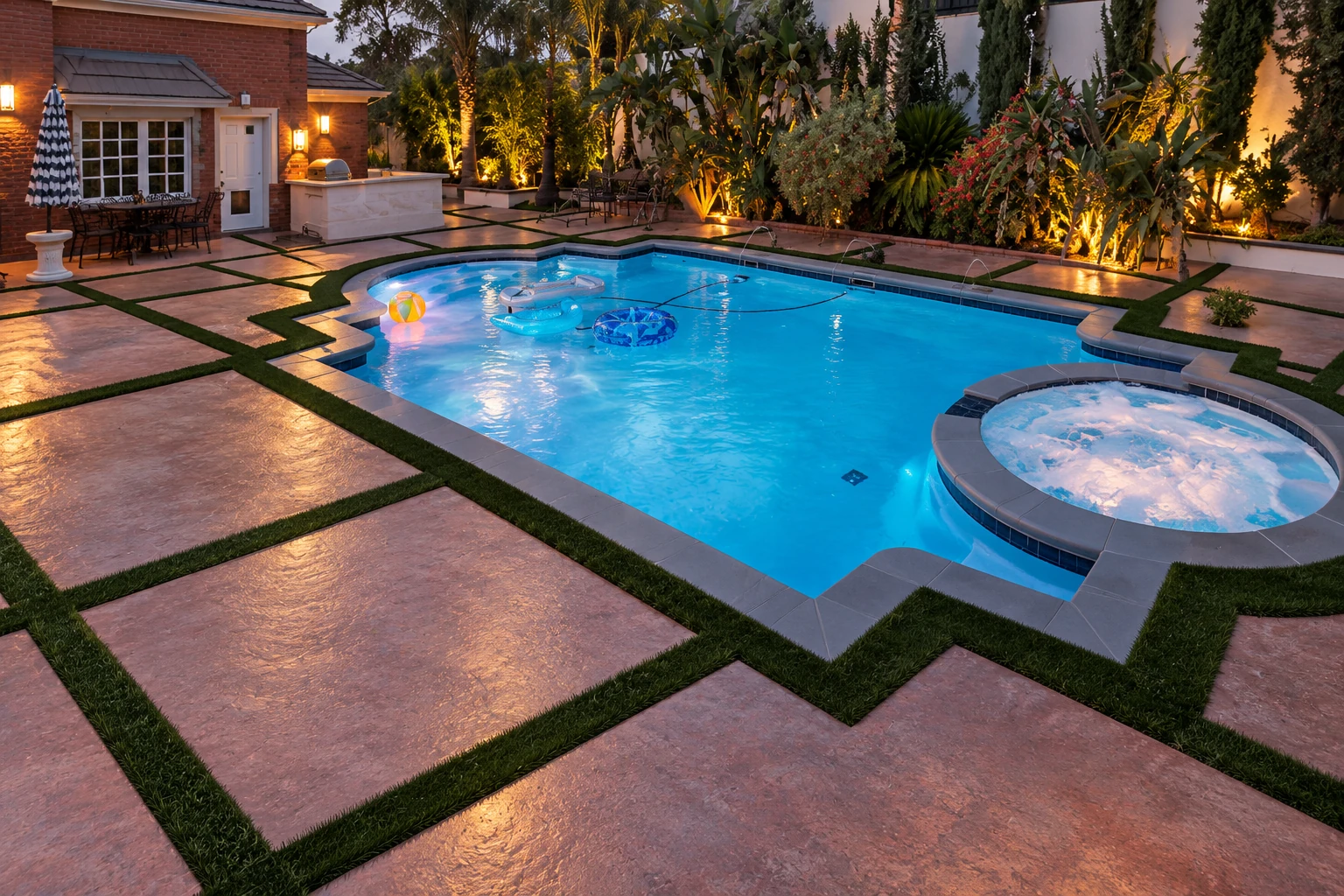
Terracing a sloped yard often opens room for a pool, and the deck around it needs the same packed base and planned drainage as the wall.
Get your wall's base and drainage planned
Concrete gives you one chance and the mistakes set with it, so call (650) 866-1977 or send the form and get the base and drainage planned before anyone digs.
Mon–Fri: 8 AM–11 PM, Sat–Sun: 7 AM–11 PM