Concrete steps construction in San Carlos, CA - steps that stay level and solid
If your steps have sunk, chipped or pulled away from the house, we check the base first and give you steps that sit firm.
Do your concrete steps need a repair or a rebuild?
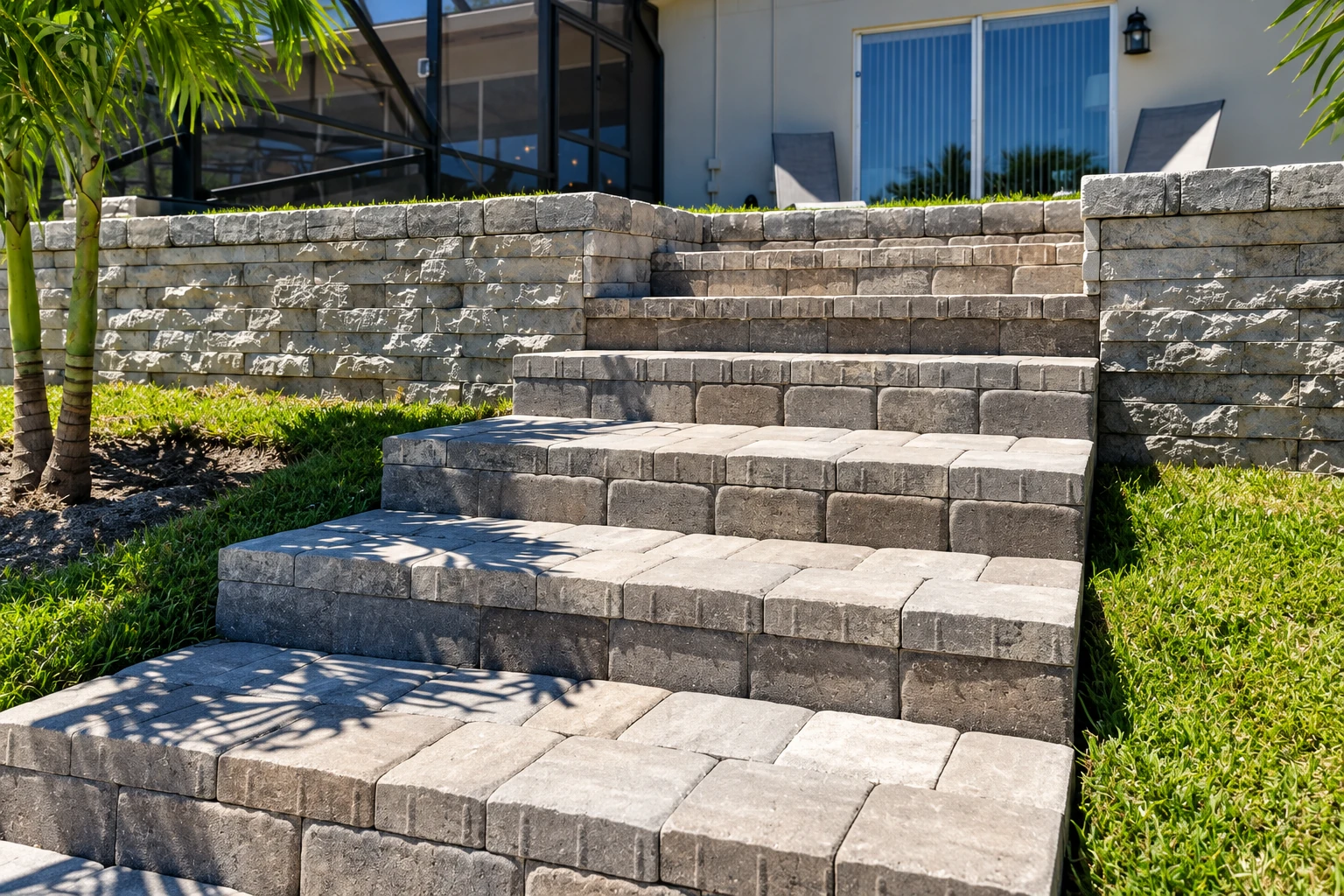
Concrete steps construction in San Carlos means building new steps to your door, either formed and poured on site or made in a factory and set in place, on a base and footing that keep them level and safe to use.
Most calls I get start with old steps that have chipped, flaked or sunk, and I check what's under them first, because a sound base can mean a repair and a failed one means a rebuild. If it's a rebuild, you can have precast steps set in place or steps formed and poured right at your door, and either way the support plan comes first. Steps that tie into the house or a landing need a different footing and different steel than steps that rest on the ground, and even small decorative steps need more than loose fill under them, which is the same groundwork behind our slab foundation building and foundation installation. The price and the schedule mostly turn on repair versus rebuild, how the steps are supported, how much old concrete comes out, and the method and finish you pick, and your written estimate spells out which of those your job needs. We're fully licensed and insured.
How do you know your concrete steps need work?
Most step problems show up underfoot before they look serious. Here's what homeowners usually notice first, and what it tends to say about the base under the concrete.
Chipped or crumbling edges where your feet land are usually surface wear, not a base problem.
A top layer flaking off in patches, called spalling, often points to a weak surface from the original pour.
Thin hairline cracks across a tread are common and usually cosmetic, though they're worth watching for growth.
One step sitting lower than the next, or the whole set tilting, means the ground underneath has settled.
A gap opening between the top step and the house means the steps are pulling away from the foundation.
Water standing on the treads or at the bottom step means the ground isn't sending runoff away.
Call rather than wait when a step has dropped or the steps have pulled away from the house, because even a small difference in height can trip someone.
What happens when you call about concrete steps in San Carlos?
We're based in San Carlos and work in the cities around it, and every steps job runs the same way, with me out front to measure and our crew on the pour.
Call or send the form
Call (650) 866-1977 or send the form and tell us how many steps you have, what they connect to and what's wrong with them. We'll set a time for me to come out.
I measure and check underneath
I come out myself, measure, look at what's under the old steps and how they're supported, and talk through what you want. You get a written estimate that says whether it's a repair or a rebuild, the method, the finish and the work involved, so you know what you're paying for before anything starts.
We form, pour and finish
Once you're ready, we schedule the work, and our crew sets the forms, pours and finishes the steps while I check the work as it goes. The base gets dug out, packed and fitted with steel before any concrete goes in, because by the end of that day it's buried for good.
We walk the finished steps
I go over the finished steps with you before we call the job done, checking that they're level, pitched to shed water and cleaned up around the forms. Satisfaction guaranteed.
Get a written estimate for your concrete steps
Send the form and we'll reply within one business day to set a time for me to come out. The on-site estimate is free and in writing, with no pressure and no obligation.
- Call
- (650) 866-1977
- Hours
- Mon–Fri: 8 AM–11 PM, Sat–Sun: 7 AM–11 PM
Finishes, base and drainage for new steps
On steps, the finish is about grip before looks. A broom finish, the fine ridges we drag into the wet surface, is the economical choice and gives your feet something to hold in the rain, so it's what I usually suggest. Exposed aggregate shows the stone in the mix but needs careful washing while it cures, the stretch it spends hardening, and stamped or colored finishes can match your house but tend to hide hairline cracks.
The part you never see matters more. Before any concrete goes in, our crew digs out the soft dirt, packs the subgrade, the ground the steps sit on, and sets rebar, steel bars that hold a crack tight, to suit how the steps are supported. If the budget gets tight, I'd cut back on the finish before the base, because a nice surface on ground that settles just cracks along with it.
We shape the ground so water runs away from the steps, adding a small channel or planter where it pools. That matters on hillside lots here, since San Mateo County says landslides most often start in heavy rain, even on gentle slopes, and that drainage affects the risk. The regional Hazard Viewer shows general neighborhood risk for planning only, and for one property it points you to a licensed professional.
Concrete steps questions from San Carlos homeowners
Can chipped or cracked concrete steps be repaired instead of replaced?
Usually yes, if the base under them is sound. Flaking, chipped edges and hairline cracks are surface damage and can be repaired, but steps that have settled, cracked clear through or pulled away from the house need more than a patch. That's why I look underneath before I give you a price.
Are precast or poured-in-place concrete steps better for my house?
Precast is better when you want steps in quickly with consistent quality, and poured-in-place is better when the shape has to be custom. Poured steps can turn a corner, meet a landing or run as one continuous flight, but they take more time and site work. For a short, straight run precast often makes sense, and for anything that has to fit the house exactly I lean toward pouring in place.
How much does it cost to build new concrete steps in San Carlos?
The cost comes down to a few things I can only measure on site. More steps, a landing, steps tied into the foundation and a lot of old concrete to break out all add to it, and a broom finish costs less than stamped or exposed aggregate. A repair on a sound base costs far less than a rebuild, and your written estimate shows each piece.
How long do new concrete steps need to cure before you can walk on them?
Stay off them until the concrete has fully cured, because walking on or loading new steps too soon can damage them. The wait changes with the weather and the job, so I'll tell you when your steps are ready to use.
Who licenses concrete contractors in California?
The Contractors State License Board licenses contractors in California, and its concrete contractor class covers forming, pouring, placing, finishing and installing concrete. The board also caps the down payment on a home improvement job at $1,000, less on smaller contracts, and any other payment has to be listed in the contract and tied to work done or materials delivered.
What causes concrete steps to sink or pull away from the house?
Usually it's what's underneath, since steps set on loose, unpacked fill settle as that dirt compresses and washes out. Water running toward the steps instead of away speeds it up, and steps that weren't set on a proper footing can drift away from the house over time.
Foundation work that ties into your steps
Slab foundation building
If your steps land on a new slab for an addition or garage, planning the slab and the steps together means they meet at the right height.
Foundation installation
When old steps have pulled away from a foundation that's failing, the house's support comes first, because new steps tied to it would move right along with it.
Send us photos of your old steps
Call (650) 866-1977 or email photos to team@concretesancarlos.com showing the cracks, any settling and where water pools, so I already know what to look for under your steps when I come out.
Mon–Fri: 8 AM–11 PM, Sat–Sun: 7 AM–11 PM